Wrocław, Utterly Unmissable: Poland's Best City You Haven't Visited Yet
Poland's fourth-largest city sits on the Oder River, draped across twelve islands and connected by more than 100 bridges — earning comparisons to Venice, Prague, and Amsterdam, yet stubbornly refusing to be any of them. It is entirely, defiantly itself.
Wrocław has been Silesian, Bohemian, Prussian, and German before becoming one of the most vibrant Polish cities of the modern era. That layered identity isn't a footnote — it is the story. Every Gothic spire, every Habsburg-era townhouse, every post-war reconstruction tells you something about a place that has repeatedly reinvented itself without ever losing its soul.
Europeans voted it the European Capital of Culture in 2016. In the years since, it has only grown bolder, more confident, and considerably more delicious.

Discover with us:

The Rynek: Europe's Most Beautiful Square?
Stand in the middle of Wrocław's Market Square — the Rynek — and you'll understand immediately why people run out of adjectives. The second-largest medieval market square in Europe is ringed by a candy-coloured parade of townhouses, none quite matching, each one more extravagantly decorated than the last. Baroque gables jostle against Gothic arcades; Renaissance loggias open onto Art Nouveau facades. It should look chaotic. It looks magnificent.
At its centre stands the Old Town Hall — a masterpiece of Silesian Gothic architecture that took over 250 years to complete, because evidently nobody was in a rush and perfection takes time. Duck inside to find a branch of the National Museum's collection of Silesian art, or simply admire the astronomical clock on its southern facade.
Come evening, the Rynek transforms: outdoor tables fill every corner, the buildings glow amber, and the whole square hums with the very specific energy of a city that knows exactly how good it has it.
"The Rynek is the kind of square that makes you slow down, sit down, and order another coffee — just so you have an excuse to keep staring at it."
And while you're exploring, keep your eyes low: Wrocław's unofficial mascots — the krasnale, or gnomes — are hiding everywhere. Beginning as a symbol of resistance during the communist era, there are now over 400 tiny bronze gnomes scattered across the city, each one with its own name and job. Hunting them is completely optional. It is also completely irresistible.
Six Reasons You Will Never Want to Leave
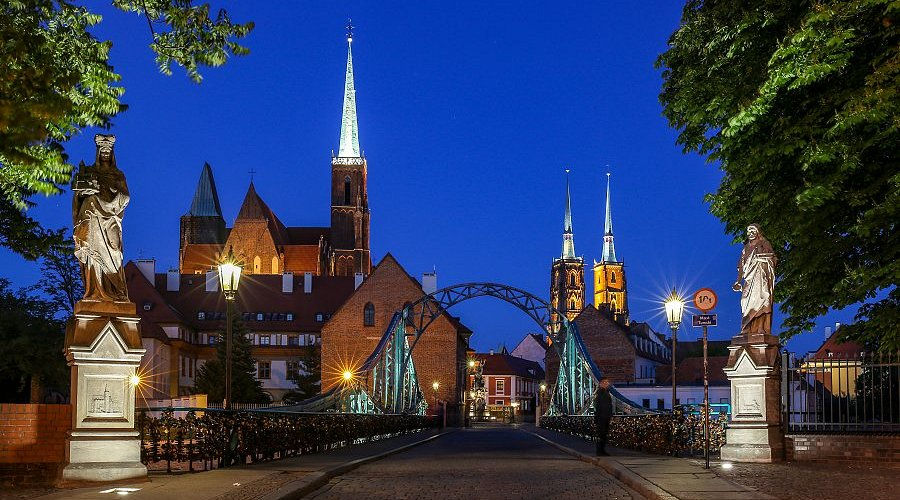
Cathedral Island (Ostrów Tumski)
The oldest part of the city feels like walking into a different century. Gas lamps are still lit by hand each evening. The twin-spired Cathedral of St. John the Baptist anchors an island that feels entirely removed from modern time.
The Food & Craft Beer Scene
Wrocław's food scene punches well above its weight. Pierogi stuffed with regional fillings, hearty żurek soup, and bigos worth flying for — all paired with some of Poland's finest craft beer from local breweries. Eating here is never an afterthought.

Panorama of the Battle of Racławice
A 360-degree, 15-metre-tall painted panorama depicting a 1794 battle, housed in its own purpose-built rotunda. Astounding in its scale, its ambition, and its ability to make you forget entirely that it is a painting.

The Japanese Garden
Tucked inside Szczytnicki Park — itself an underrated gem — this 1913 Japanese garden was restored with input from Kyoto horticultural experts. In spring, the cherry blossoms are quietly, absurdly beautiful.

The Opera & Theatre Scene
The Wrocław Opera occupies one of the finest neo-Baroque opera houses in Central Europe. Tickets remain remarkably affordable by western standards. A night here — even without understanding a word — is an unforgettable experience.

Bridge & Island Hopping
Rent a kayak or simply walk: Wrocław's network of islands and bridges is best explored without a plan. Cross the Tumski Bridge and add a padlock to the railings — a tradition that somehow never feels corny here.
The Neighbourhoods That Will Surprise You

The Rynek is the obvious starting point, but Wrocław's real character lives in the streets that fan out from it. Świdnicka Street is the city's grand commercial boulevard — all 19th-century grandeur and excellent coffee. Head south and you find yourself in Nowe Miasto, where independent bookshops, vinyl record stores, and plant-filled wine bars occupy the ground floors of beautifully peeling fin-de-siècle buildings.
For a taste of Wrocław's young, creative energy, cross the river to Nadodrze — once overlooked, now one of the most exciting districts in Poland. Street art, farm-to-table restaurants, and neighbourhood cocktail bars that open at 6pm and still feel lively at 2am. This is the Wrocław the guidebooks are still catching up with.
"Nadodrze is what happens when artists, chefs, and bar owners move into a beautiful neighbourhood before the tourists do. Go now."
And if you have a full day to spare, take the 30-minute drive to Książ Castle — the largest castle in Silesia, rising dramatically from forested hills and harbouring wartime mysteries that have never quite been resolved. Whether the rumoured hidden treasure exists is debatable. The drama absolutely does not need it.
Everything You Need to Know Before You Go
Best Time to Visit
May to September for warm days and outdoor dining. December for one of Central Europe's most magical Christmas markets, right on the Rynek.
Getting There
Wrocław Airport (WRO) connects to most major European cities. Budget airlines fly direct from London, Amsterdam, Paris, and beyond. From Warsaw by train: under 3 hours.
Getting Around
The Old Town is entirely walkable. Trams cover the wider city efficiently and cheaply. For the islands and river, walking or cycling is a genuine joy.
Budget
Very favourable for Western European visitors. Expect to pay roughly half of what you'd spend in a comparable German or Austrian city, with no compromise on quality.
Language
Polish is the official language, but English is widely spoken in the centre, restaurants, and hotels. A few words of Polish — dziękuję (thank you), proszę (please) — will win you warm smiles.
How Long to Stay
A long weekend (3–4 nights) covers the essentials comfortably. A full week lets you exhale, explore the surroundings, and genuinely feel at home.
This brings us to the end of our exploration of Wrocław, a city that truly lives up to its “utterly unmissable” title. If you're exploring Poland, make sure to check out our other blog posts! To continue discovering hidden gems and unique destinations, stay tuned for more features on our website. Follow us @thewalkingparrot to stay updated on new releases and join us as we explore fresh spots around the world. We'll be back soon with another exciting article! And if you're ever in Lisbon, don't miss our Fado, Food, and Wine tour for an authentic taste of the city!


Comments