Wrocław Travel Guide: 5 Must‑Visit Places in Poland’s Enchanting “City of a Hundred Bridges”
Wrocław is one of those cities that quietly steals your heart. It doesn’t shout for attention the way some European destinations do; instead, it charms you slowly, with its riverside beauty, its pastel‑colored facades, its whimsical dwarfs, and its layered history that spans over a thousand years. Often overshadowed by Kraków or Warsaw, Wrocław is a city that rewards curiosity — a place where every bridge leads to a new discovery, every alley hides a story, and every square feels like a stage set for something magical.
Located in southwestern Poland, Wrocław sits on the Oder River and stretches across 12 islands connected by more than 100 bridges, earning it the nickname “The Venice of Poland.” But Wrocław is far more than its waterways. It’s a city shaped by shifting borders, rebuilt after war, infused with academic energy, and animated by creativity. Whether you’re a history lover, architecture enthusiast, foodie, or casual wanderer, Wrocław offers a travel experience that feels both intimate and grand.
This guide dives deep into five must‑visit places that capture the essence of Wrocław — but along the way, you’ll also find stories, tips, and hidden gems that will help you experience the city like a seasoned traveler rather than a tourist passing through.
DISCOVER WITH US:
Market Square (Rynek) & The Old Town Hall: The Beating Heart of Wrocław
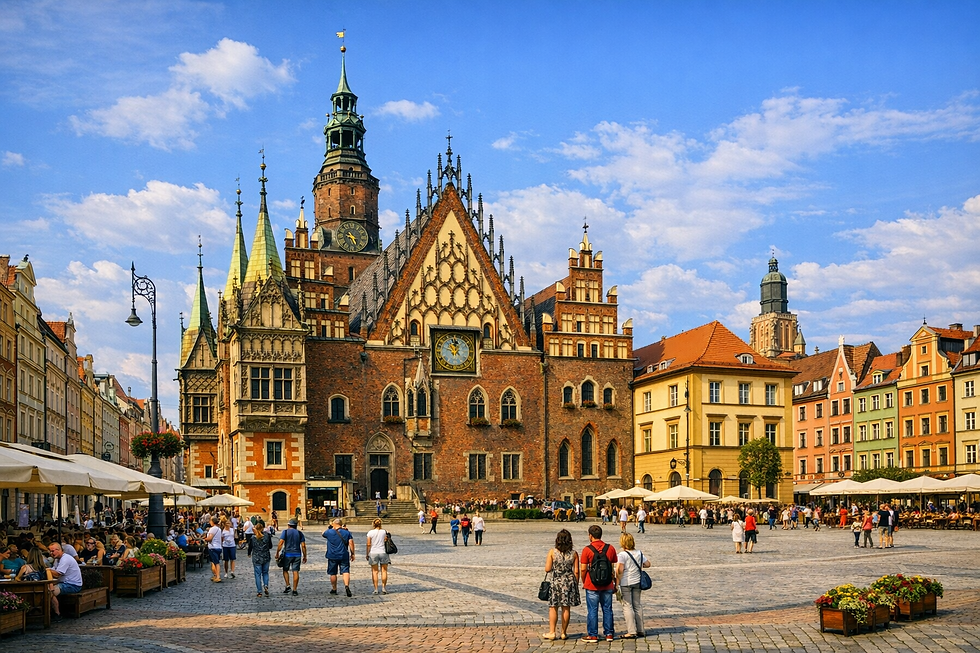
If Wrocław has a soul, it lives in the Market Square, one of the largest and most beautiful medieval squares in Europe. The moment you step into the Rynek, you’re greeted by a kaleidoscope of colors, with restored townhouses painted in soft pastels, Gothic spires rising dramatically into the sky, and lively cafés spilling onto the cobblestones. At its center stands the Old Town Hall, a Gothic masterpiece nearly 250 years in the making, admired for its ornate façade, astronomical clock, and the historic Piwnica Świdnicka restaurant tucked beneath it, considered one of the oldest in Europe. The square is unmissable because it perfectly showcases Wrocław’s architectural diversity and shifts in character throughout the day, from calm, golden mornings to energetic evenings filled with music and conversation.
Seasonal events such as Christmas markets, summer festivals, and open‑air concerts bring the entire space to life. As you explore, you can wander down side streets like Świdnicka and Oławska to discover boutiques and hidden courtyards, climb the tower of St. Elizabeth’s Church for sweeping views over the rooftops, and sample local dishes such as pierogi, żurek, and traditional Silesian specialties. For a truly magical moment, visit at sunrise when the square is quiet, softly lit, and feels as though the entire heart of Wrocław belongs to you alone.
Ostrów Tumski (Cathedral Island): A Journey Back in Time
Ostrów Tumski is the oldest part of Wrocław, a place where time seems to slow down and history feels almost tangible. Once a separate island, it remains a peaceful, atmospheric corner of the city, filled with cobblestone streets, historic buildings, and a sense of quiet reverence. The Cathedral of St. John the Baptist dominates the skyline with its twin Gothic spires, and although the cathedral has been rebuilt many times since the 10th century, it continues to stand as a symbol of the city’s resilience. Inside, you’ll find stained glass windows, ornate chapels, and a serene atmosphere that invites reflection.
Ostrów Tumski is also one of the few places in Europe where gas lanterns are still lit by hand each evening, adding a romantic glow to the streets. A walk across Tumski Bridge, often called the Lovers’ Bridge, is a favorite among visitors, and the nearby Botanical Garden offers a peaceful escape from the city. Arriving just before sunset allows you to witness the lamplighter beginning his rounds, a small but unforgettable ritual that feels like a glimpse into living history.

Centennial Hall & Pergola: Where Architecture Meets Leisure
Centennial Hall, a UNESCO World Heritage Site, showcases a completely different side of Wrocław. Built in 1913 by architect Max Berg, it is considered one of the most important architectural achievements of the early twentieth century, featuring one of the world’s largest reinforced concrete domes. The hall is surrounded by a vast recreational area that includes the Pergola, a long, curved colonnade overlooking a large pond, and the Wrocław Multimedia Fountain, which hosts spectacular water‑and‑light shows during the warmer months.
This part of the city is ideal for leisurely walks, relaxed afternoons, and scenic photo opportunities. The nearby Japanese Garden, with its bridges, ponds, and traditional landscaping, offers a tranquil retreat, while Centennial Hall itself frequently hosts concerts, exhibitions, and cultural events. If you visit in summer, the evening fountain shows are especially captivating, combining music, lights, and water choreography in a way that feels both modern and magical.

Wrocław University & the Mathematical Tower: A Baroque Treasure
Wrocław University is not just an academic institution but a cultural and architectural landmark. Founded in the early eighteenth century, its main building is a Baroque masterpiece that rivals many European palaces. The highlight is the Aula Leopoldina, an ornate ceremonial hall adorned with frescoes, gilded sculptures, and intricate woodwork, making it one of the most stunning university interiors in the world. After exploring the Aula, climbing the Mathematical Tower rewards you with sweeping views of the Old Town, the Oder River, and the city’s many bridges.
The university’s history is deeply intertwined with Wrocław’s identity, and wandering through its halls feels like stepping into a living museum. Visiting early in the day allows you to enjoy the spaces in a quieter atmosphere, giving you time to appreciate the craftsmanship and grandeur that define this remarkable institution.

The Wrocław Dwarfs (Krasnale): A City‑Wide Treasure Hunt
No visit to Wrocław is complete without encountering its beloved dwarfs, or krasnale. These small bronze statues, now numbering more than six hundred, are scattered throughout the city, each with its own personality, story, and location. The tradition began in the 1980s as a symbol of the Orange Alternative, an anti‑communist movement that used humor and absurdity as a form of resistance. Today, the dwarfs have become a playful emblem of Wrocław, turning the city into a whimsical treasure hunt for visitors of all ages.
Some dwarfs represent professions, others commemorate historical moments, and many simply add charm to unexpected corners. You can follow a map to find them, but the most delightful discoveries often happen by accident as you wander through different neighborhoods. Rather than trying to find them all in one day, let the dwarfs guide your exploration naturally, adding a sense of fun and spontaneity to your visit.

Beyond the Top 5: More Places Worth Your Time
Wrocław is full of surprises, and beyond the essential five places, the city offers many more experiences worth exploring. The Nadodrze District is a creative neighborhood filled with murals, artisan workshops, and hip cafés, making it a favorite among artists and young locals. Hydropolis, a modern interactive museum dedicated to water, is an engaging stop for families and science lovers. Szczytnicki Park, one of the largest parks in the city, is perfect for long walks, picnics, and quiet afternoons surrounded by nature. The Four Denominations District reflects Wrocław’s multicultural past, with a church, synagogue, and two cathedrals located within a few blocks of each other. For a modern contrast, the Sky Tower viewpoint offers panoramic views from the tallest building in the city.

Practical Tips for Visiting Wrocław
Wrocław is a city that can be enjoyed year‑round, but each season offers a different experience. Spring brings mild weather and blooming parks, while summer fills the city with festivals, outdoor events, and lively nightlife. Autumn offers beautiful foliage and comfortable temperatures, and winter transforms the city into a fairytale with its Christmas markets. The city is extremely walkable, but trams, buses, city bikes, and electric scooters make getting around easy.
Local cuisine is hearty and delicious, with dishes such as pierogi, żurek, gołąbki, Silesian dumplings, and Polish cheesecake offering a taste of regional tradition. Budget‑friendly options are plentiful, especially lunch menus known as zestaw dnia, and many museums offer free admission days.
Final Thoughts: Why Wrocław Stays With You
Wrocław is a city that rewards those who take the time to explore it deeply. It’s not just about checking off landmarks but about soaking in the atmosphere, noticing the details, and letting the city’s stories unfold naturally. From the grandeur of its Gothic cathedrals to the whimsy of its tiny dwarfs, from the serenity of its river islands to the vibrancy of its market square, Wrocław blends history, creativity, and warmth in a way few cities do.
Whether you’re visiting for a weekend or a longer stay, these five must‑visit places offer a rich introduction to the city, but don’t be surprised if Wrocław leaves you wanting more. Many travelers come for a short trip and end up returning again and again, drawn back by the city’s charm, beauty, and soul.
We have reached the end of Wrocław Travel Guide: 5 Must‑Visit Places in Poland’s Enchanting “City of a Hundred Bridges”. If you’re planning a visit to Poland, be sure to check out our previous blogs for more tips on where to eat, drink, and explore. To continue discovering more hidden gems and captivating destinations, stay tuned for more articles on our website. Follow us @thewalkingparrot to be continuously updated on new releases and join us as we embark on new adventures. We will be back soon with a new article!


Comments