The Food Lover's Guide to Coimbra, Portugal (What to Eat, Drink & Experience)
So you've heard about Coimbra. Maybe someone told you it's "just a university town between Lisbon and Porto." Maybe you were planning to spend two hours there on your way north and move on. We're here to tell you, kindly but firmly, that would be a big mistake.
Coimbra was once the medieval capital of Portugal, and for over a century it was the beating heart of a fledgling nation perched on the banks of the Mondego River.
Today it's something even more interesting: a city where centuries of history collide with a buzzing student energy, where cobblestone alleys lead to tiny restaurants that have barely changed in decades, and where the food on your plate tells you more about Portugal than any museum ever could.
If you're a food lover, Coimbra deserves a proper visit. Here's everything you need to eat, drink, and experience.

Why Coimbra is Different from Lisbon and Porto
Let's be honest — Lisbon and Porto get a lot of love. And they deserve it. But Coimbra has something those cities can't quite replicate.
One of the most unique aspects of Coimbra is how the energy changes from one day to the next: during the week, the city is crowded with students who fill the streets and squares with excitement. Then on the weekends, it takes on a tranquil, serene air. This duality gives Coimbra a character that feels genuinely alive rather than polished for tourists.
Its main drag — with glassy marbled stone underfoot, old-timey shops and bakeries winking their neon signs, and more locals than tourists — is a delight to simply wander. And then there's the food. Central, hearty, historically rooted, and deeply delicious.
What to Eat in Coimbra: The Essential Food Guide

1. Leitão à Bairrada: The King of Central Portugal
If you eat one thing in Coimbra, make it this.
Leitão à Bairrada is spit-roasted suckling pig and was voted by Portugal's population as one of the Seven Wonders of Portuguese Gastronomy. That's not marketing. That's a nation of proud food lovers putting their cards on the table.
It's usually served with crispy skin and tender meat, accompanied by orange slices and potato chips. The contrast of that shatteringly crisp skin against the soft, fatty meat underneath is the kind of thing that makes you go quiet mid-conversation. Suckling pigs have been cooked this way in the Bairrada region since the 1700s.
Don't leave without trying it — even if you have to get it as a sandwich from a roadside stall on your way out of town.

2. Chanfana: The Soul Food of Coimbra
Chanfana is a rich goat stew, and the best version arrives at your table in huge oven mitts grasping a bubbling terracotta pot loaded with dark, rich meat. It's slow-cooked for hours in red wine, garlic, bay leaf, and paprika until it becomes something deeply comforting and complex.
Historically, chanfana was a dish designed to make the most of an aged goat that no longer produced milk, requiring proper marinating and long cooking time for the meat to become tender. Peasant ingenuity at its finest — and the result is extraordinary.

3. Bacalhau: Portugal's Eternal Love Affair
You already know Portugal is obsessed with salt cod. In Coimbra, that obsession is fully on display. Solar do Bacalhau is a local favourite, known for its Bacalhau à Lagareiro — salted codfish cooked with olive oil, garlic, and potatoes until the fish is tender and the potatoes are golden and crispy. It's the kind of dish that makes you understand why the Portuguese have reportedly invented over 365 ways to cook bacalhau — one for every day of the year.

4. The Sweets: Coimbra's Convent Confections
Coimbra is filled with ancient convents and monasteries, and there are half a dozen traditional confections to try, some whose recipes date back hundreds of years.
Here are the ones worth tracking down:
Pastéis de Tentúgal, Impossibly delicate, flaky pastry filled with a rich egg cream. They come from Tentúgal, a small village about 20 km from Coimbra, but you'll find them throughout the city. Worth every calorie.
Arrufadas de Coimbra, Sweet breakfast rolls lightly flavoured with cinnamon and lemon zest. The best ones can be found fresh from the oven at Pastelaria Briosa on Rua Ferreira Borges, especially early on Sunday mornings.
Queijadas de Coimbra, A sweet pastry made with cheese, eggs, sugar, and flour, baked until golden. Simple, slightly salty-sweet, and utterly addictive.
What to Drink in Coimbra

Bairrada Wine
Just thirty minutes north of Coimbra, the Bairrada region has had a protected denomination of origin since 1980. It's home to wines made with Baga grapes — deep red, still or sparkling — and they're the natural pairing for leitão. Order a sparkling Bairrada white with your suckling pig and you'll understand why the locals don't mess with the formula.
Dão Wine
A velvety Dão red complements game meats beautifully, while sparkling Bairrada whites cut through rich stews. The two regions essentially cover every food situation you'll encounter in Coimbra.
Ginja
Sweet, tangy cherry liqueur that's become a symbol of central Portugal. Often served in a tiny edible chocolate cup. Order one after dinner and enjoy it the way the locals do — slowly, standing at a bar, watching the street outside.

Coffee: The Portuguese Way
Coffee culture is deeply ingrained in Portuguese life. Enjoy a bica (espresso) at any café throughout the day — it's a fundamental part of the local routine. Don't order a "coffee." Order a bica, sit down, and take your time.
Where to Eat: The Spots Worth Knowing

Zé Manel dos Ossos, A tiny, six-table true tasca where the specialty is a silver tray loaded with the spine bones of a pig simmered in peppery broth — and the feijoada de javali (wild boar bean stew) is essential. It's small, it's busy, and there will probably be a wait. Go anyway.

Café Santa Cruz, Housed in a former chapel next to the Igreja de Santa Cruz, it's a must-visit for its architectural splendour and traditional pastries. Try their house specialty crúzios with a meia de leite (coffee with milk) while admiring the Gothic arches and vaulted ceilings. It's one of those places that earns its reputation.
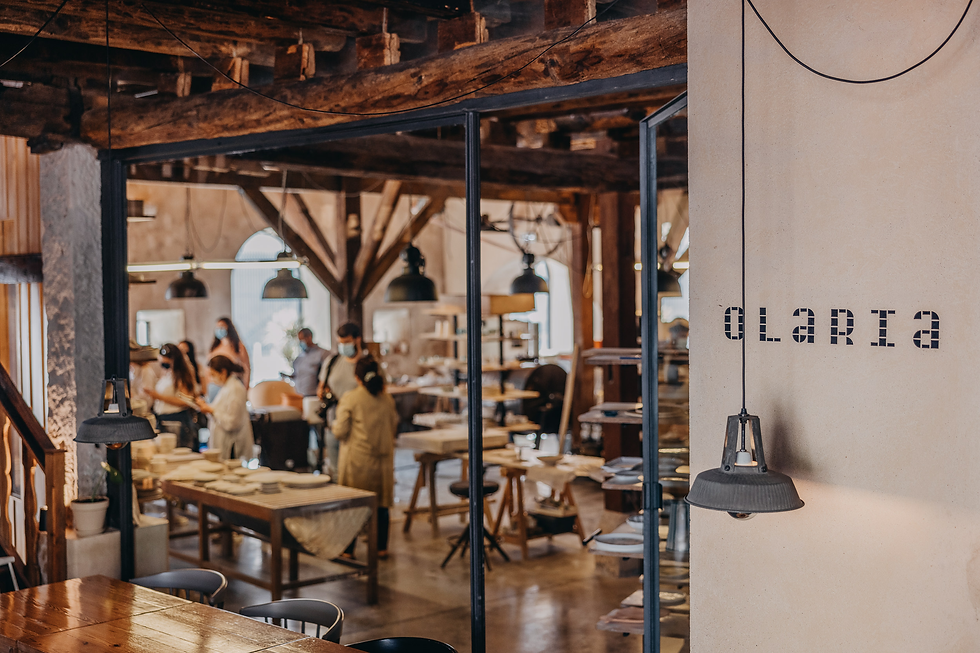
Refeitório da Baixa, This gorgeous little restaurant shares its space with the last ceramic factory in Coimbra, open since 1824. Diners sit next to a roaring fireplace beneath the giant flue of a former kiln, watching craftspeople work through big glass windows. Perfect for a special evening.
The Menu do Dia: Coimbra's Best-Kept Secret
If you want to eat like a local without spending a fortune, the menu do dia is your best friend. Many traditional restaurants offer an economical daily menu at lunchtime, including soup, main course, dessert, and coffee for around €10–12 — especially good value around the university area.
Order it. Sit down. Don't rush. This is exactly how Coimbra is meant to be experienced.
The Food Culture You'll Absorb Just by Being There
Food in Coimbra isn't just on the plate. It's in the café conversations, the student taverns, the Fado drifting out of a restaurant doorway on a Tuesday evening. Coimbra's historical cafés were the stage for many enlightening discussions between prominent Portuguese writers, who shared their visions for the future of the country. There's something about eating and drinking here that feels connected to something bigger.
Coimbra wasn't made to be seen from the back of a tour bus. It's the kind of place that invites you to slow down, breathe in the history, and maybe stop for a pastel de nata or two along the way.
The Best Way to Experience Coimbra's Food Scene

You can wander Coimbra on your own and stumble into good meals. But you'll miss the stories behind the food, why chanfana was invented, what the students are actually eating, which tasca the locals queue for on a Friday lunch.
That's exactly why we created our Coimbra Food & Drink Tour at The Walking Parrot. We take you through the city's most characterful neighbourhoods, into places you'd walk past without a second glance, and introduce you to the food and drink that makes this city tick. Small groups, local knowledge, no tourist menus.
If you want to understand Coimbra through your stomach — which, honestly, is the best way — we'd love to show you around.

Getting There: Coimbra is easy to reach by train from both Lisbon (around 1 hour 40 minutes) and Porto (around 1 hour 10 minutes). It makes a perfect stop between the two cities — or a destination in its own right.
Best Time to Visit: The first week of May is particularly lively, but the food is excellent year-round. Spring and early autumn offer the most comfortable weather for exploring on foot.
Ready to eat your way through Coimbra? Browse our food tours and save your spot — groups fill up fast.
This brings us to the end of our journey through Coimbra, a city where history, culture, student traditions, and authentic Portuguese flavours come together in a truly memorable experience. If you’re planning to explore Portugal further, be sure to check out our other blog posts to discover more hidden gems and unique destinations on our website. Stay connected with us @thewalkingparrot to keep up with our latest travel stories and city guides from around the world. We’ll be back soon with more exciting adventures and insider tips.
And if you’re visiting Portugal, don’t miss our Fado, Food, and Wine experiences in Lisbon for an authentic taste of Portuguese culture with The Walking Parrot!


Comments