Lagos, Portugal: The Algarve’s Coastal Gem You Need to Visit
Lagos, Portugal, is an enchanting mix of towering sea crags, deep maritime history, and vibrant culinary culture. Here is a comprehensive breakdown of the city's top beaches, essential activities, local food, and optimal timing for your trip. Lagos boasts a split personality when it comes to its coast: to the south, you'll discover intimate, dramatic cliffside coves, while to the east, endless powdery sandbanks take over. It balances its maritime natural beauty with a beautifully preserved medieval center and historic defense landmarks. Algarve cuisine celebrates the bounty of the Atlantic ocean, focusing heavily on charcoal grills, fresh shellfish, and aromatic stews.
Discover with us:

Best beaches in Lagos
Praia do Camilo
Praia do Camilo is a postcard-perfect cove tucked away between steep, honey-colored limestone formations. It feels incredibly exclusive due to its geological isolation and crystalline turquoise water.
The Stairway: Reaching the beach requires walking down an iconic wooden staircase of about 200 steps that snakes its way along the cliff face.
Secret Tunnel: At the base, a hand-carved stone pedestrian tunnel cuts through the rock, connecting you to an adjacent, hidden sandy enclave.

Praia Dona Ana
Praia Dona Ana offers a more spacious alternative to the smaller cliff pockets while retaining the region's famous rugged scenery. The beach features deep golden sand bordered by towering sea stacks sprouting from the water.
Calmer Waters: The giant, circling rock faces block out aggressive Atlantic ocean winds, making the bay peaceful and family-friendly for swimming.
Local Comforts: Unlike remote wild beaches, it provides direct, easy road access, nearby facilities, and casual beach bars within steps of the sand.
Beach Estudantes
Beach Estudantes is a small, dramatic cove heavily favored by photographers. It is highly recognizable due to its historical stone masonry bridge that arches high in the air between two cliff walls.
Tunnel Trails: At low tide, you can walk through a series of interlinked rock tunnels leading right over from neighboring Praia da Batata.
Sheltered Sand: The small sandy patch is deeply hemmed in by stone structures, shielding sunbathers completely from shifting coastal drafts.
Meia Praia
Meia Praia contrasts sharply with the southern coves, offering a massive, 5-kilometer crescent of uninterrupted golden sand. It is a wide-open landscape perfect for long walks
or sprawling out away from crowds.
Watersports Haven: Because it lacks cliff shelters, the open Atlantic breezes turn this beach into a premier regional destination for windsurfing and kitesurfing.
Endless Space: Even during peak summer congestion, the sheer size of the sand bank guarantees you will find a quiet, uncrowded area to set up an umbrella.
Things to do in Lagos
Ponta da Piedade
Ponta da Piedade is a majestic headland at the southern tip of the city where the ocean has spent millennia carving out natural arches, deep grottoes, and sea caves.
The Boardwalk: A modern, beautifully designed network of wooden clifftop pathways allows visitors to safely walk the headland edge and catch incredible ocean panoramas.
Grotto Access: A steep stone staircase runs down to a small sea platform where local fishermen run small motorized boats to navigate inside the tight, swirling caves.

Church of Saint Anthony
Church of Saint Anthony features a modest, whitewashed Baroque exterior that gives no indication of the visual masterpiece hiding within. The sanctuary is widely regarded as one of Portugal's most stunning religious art installations.
Gilded Baroque Wood: The entire interior is coated in breathtaking, hyper-detailed wood carvings covered in pure gold leaf, framing vivid ceiling frescoes.
Traditional Azulejos: The lower portion of the walls is finished with iconic blue-and-white 18th-century tile mosaics.

Forte Ponta da Bandeira
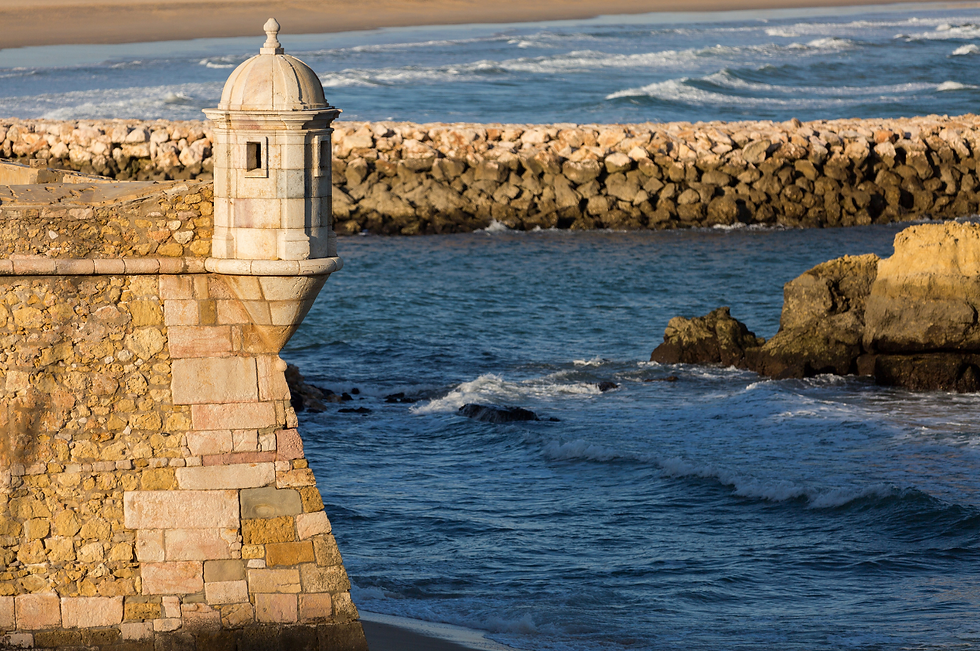
Forte Ponta da Bandeira guards the entrance to the old harbor estuary, standing as a pristine 17th-century stone defense fortress. It provides an immediate look into Lagos' military history right off the main waterfront promenade.
Classic Architecture: The fort retains its working drawbridge, thick defensive corner turrets, and an interior chapel lined in patterned tiles.
Rooftop Ramble: You can pay a small entry fee to climb onto the main stone ramparts for sweeping, breezy views of the sea and town walls.
Mercado de Escravos - Núcleo Museológico Rota da Escravatura
Mercado de Escravos - Núcleo Museológico Rota da Escravatura offers an important, somber, and deeply informative educational experience. Housed in a 15th-century structure on Praça do Infante Dom Henrique, it marks the location of Europe’s first modern slave market.
Essential Documentation: The museum uses carefully researched timelines and historical media to document the human toll of Portugal’s maritime expansions.
Archaeological Findings: Displays feature items uncovered during regional excavations, keeping the memory of the trade's victims alive.
Food you must try
Cataplana de Marisco
This is the ultimate regional dish. It's a rich seafood stew consisting of clams, prawns, mussels, and white fish simmered with onions, tomatoes, and garlic. It is cooked in a traditional, clam-shaped hinged copper pot (cataplana) that is opened directly at your table, releasing an incredible cloud of briny steam.

Sardinhas Assadas (Grilled Sardines)
A staple of the Portuguese summer, especially around June’s festival season. Caught fresh daily, these plump sardines are coated heavily in sea salt, grilled whole over open charcoal, and served simply over boiled potatoes or a slice of crusty bread to catch the smoky juices.
Polvo à Lagareiro
For octopus lovers, this dish is essential. The octopus is boiled until incredibly tender, then roasted alongside smashed baby potatoes in a heavy pooling of premium Portuguese olive oil, garlic, and fresh herbs until the edges get slightly crispy.
Dom Rodrigos & Pastéis de Nata
For dessert, look for a local bakery (pastelaria). While the creamy custard pastel de nata dusted with cinnamon is a national favorite, the local Algarve specialty is Dom Rodrigos—an ultra-sweet confection made of delicate egg threads, ground almonds, sugar syrup, and cinnamon, wrapped up like a little gift in colorful foil.
Best time to visit Lagos
The Algarve region gets over 300 days of annual sunshine, but choosing the right month completely changes your experience.
The Shoulder Seasons (May to June & September to October): This is the absolute best time to visit.
The weather is beautifully warm, hovering between 22°C and 26°C (71°F–79°F), which is ideal for both swimming and hiking. Best of all, you avoid the massive waves of summer tourists, meaning hotel rates drop and you can snag tables at popular old town taverns without booking weeks ahead.
The Peak Summer (July to August)
This period brings maximum heat and vibrant nightlife, but also intense crowds. The narrow streets of the historic center fill up completely, and tiny cliffside beaches like Praia do Camilo lose almost all their sand space by midday.
The Low Season (November to April)
Winters are mild compared to northern Europe, often seeing sunny skies and temperatures around 15°C (59°F). While it's too chilly for swimming, it's perfect for a peaceful hiking holiday. Note that many seasonal beach bars, boat operators, and surf schools close down completely during these months.
We've reached the end of this article. We hope you liked it. You can read other articles on our website. How about What Is Porto Known For? 10 Unforgettable Experiences in Portugal’s Most Beautiful City. Remember to follow us @thewalkingparrot to be continuously updatet on the new releases. We will be back soon with a new article!

Comments