Best Places to Visit in Gdańsk: 6 Must-See Spots for a Fairytale City Break

Gdańsk, Poland, is the kind of city that makes you slow down. Colorful merchant houses line its historic streets, amber shops glow behind old-fashioned windows, and the Motława River reflects a waterfront shaped by centuries of trade. A short journey from the center, the Baltic Sea brings a completely different mood: wide sandy beaches, sea air, and long sunset walks. This mix of architecture, history, food, and coastline is what makes Gdańsk feel almost like a fairytale city break.
The best places to visit in Gdańsk are more than a collection of pretty photo spots. Each one helps tell a different part of the city’s story, from its role as a Baltic trading port to the details of everyday life in the historic center. Whether you have one day or a long weekend, this guide will help you choose the highlights, group nearby sights together, and leave enough time to enjoy the city at your own pace. You’ll find practical timing tips, local details to look out for, ideas for trying Polish food, and advice for adding the coast to your itinerary.
In This Guide to visit Gdańsk
1. Long Market: One of the best places to visit in Gdańsk

Long Market’s colorful facades and lively pedestrian street in Gdańsk’s Main Town.
If it is your first visit, begin in the Main Town around Długa Street and Długi Targ, usually called Long Market in English. This is the postcard scene many travelers imagine when they think of Gdańsk: tall, narrow townhouses in warm shades, decorative facades, elegant gateways, and historic buildings gathered around a lively pedestrian route.
Walk slowly rather than moving straight from one landmark to the next. Look above the shopfronts at the sculpted details and gables, and pause to notice how different each facade is. Long Market is also a useful starting point for exploring nearby sights, including the Main Town Hall, Artus Court, Neptune’s Fountain, and the Green Gate by the river.
For photos, visit earlier in the morning, when the streets are often calmer and the light can be softer. Late afternoon is another lovely time, when the buildings take on a warm glow. Cafés and restaurants line the area, so it is easy to stop for a coffee or a meal, although prices can be higher right beside the busiest landmarks.
Local tip: Look down side streets as well as ahead along the main pedestrian route. Some of the best architectural details are easy to miss when you follow the crowd.
2. Mariacka Street: Amber Shops and Old-World Details
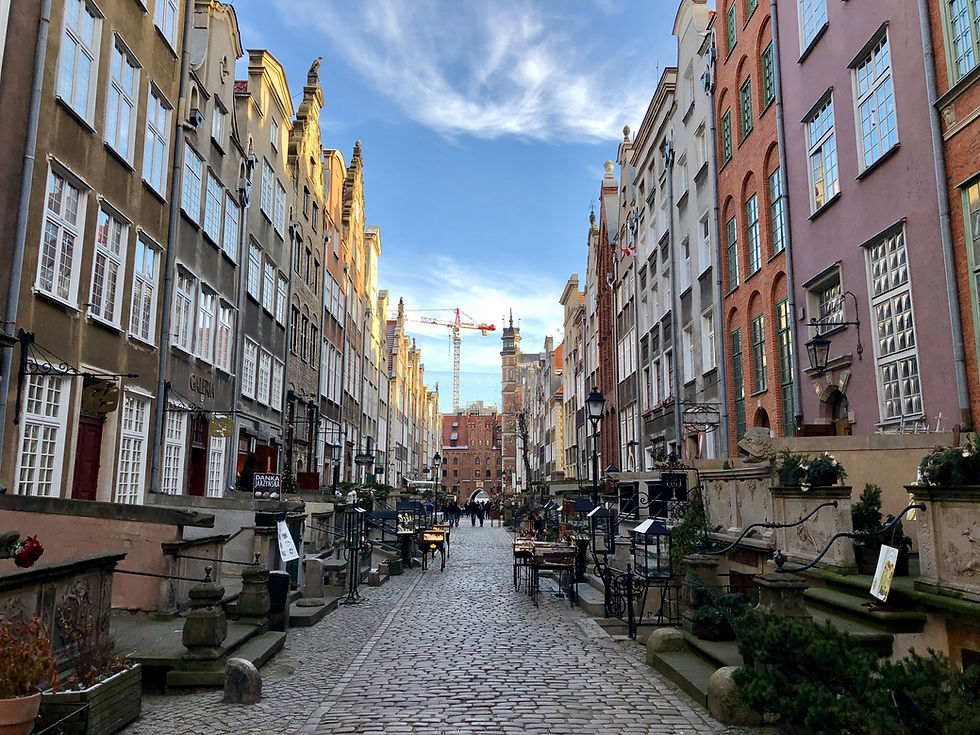
Mariacka Street’s cobblestones, amber shops, and ornate stone terraces.
Mariacka Street is one of the most atmospheric places in Gdańsk. It is narrower and more intimate than Long Market, with cobblestones, decorative stone terraces, carved details, and amber shops that reflect the region’s long relationship with the golden-colored gemstone. The street feels made for an unhurried walk: browse the windows, notice the small architectural details, and take time to look back toward the church towers.
Amber is often associated with the Baltic coast, and Gdańsk is a well-known place to see amber jewelry and decorative pieces. If you are thinking about buying something, compare a few shops, ask questions about the material and craftsmanship, and request a receipt. You do not need to buy anything to enjoy Mariacka; the displays and street itself are part of the experience.
Early morning is a good choice if you want a quieter atmosphere for photography. Later in the day, the street becomes livelier as visitors stop at shops and cafés. Rain can make the cobblestones slippery, so wear shoes that are comfortable on uneven surfaces.
Photo idea: Frame the stone terraces in the foreground with a church tower in the distance. It captures the distinctive layers of Mariacka in one shot.
3. Motława Waterfront and the Gdańsk Crane: See the City by the River

The Motława waterfront, with historic merchant houses reflected in the river.
For a different view of Gdańsk, head to the Motława waterfront. Historic buildings, boats, riverside paths, and outdoor terraces create a scene that changes throughout the day. In daylight, the water highlights the brick and painted facades; near sunset, reflections make the area especially photogenic. It is also a natural place to pause for lunch, a drink, or a relaxed walk after visiting the central streets.
One of the waterfront’s defining landmarks is the Gdańsk Crane, known in Polish as Żuraw. The historic port structure reminds visitors that this was a working trading city, not simply a beautiful backdrop. From the quay, look across the river toward the opposite bank and Granary Island, where newer buildings sit alongside historic character. Crossing the footbridges and viewing the waterfront from the other side can give you a different perspective on the skyline.
Try to visit once in daylight and again in the evening if your schedule allows. The atmosphere changes as the restaurants light up and the water reflects the buildings. Boat trips may operate seasonally, but departure points and schedules can change, so check current details on the day rather than planning around an assumed timetable.
Local tip: The opposite bank of the Motława is worth exploring too. Turn around and look back toward the Crane and the colorful waterfront houses for a classic wide-angle view.
4. Neptune’s Fountain and the Royal Route: A Classic Gdańsk Photo Stop

Neptune’s Fountain in front of the ornate Artus Court facade.
Neptune’s Fountain is one of Gdańsk’s best-known symbols and a natural stop while exploring Long Market. The bronze figure of the Roman sea god stands in front of Artus Court, close to the Main Town Hall. Its location connects the city’s maritime identity with the grand public spaces built during its trading heyday.
The fountain dates back to the early seventeenth century, and its history reflects the changes that shaped Gdańsk over time. It was dismantled and stored during the Second World War before being reassembled after the conflict. Today, travelers often pause here for a photograph, but the surrounding buildings are just as worth a closer look.
Because this is a central landmark, it can be busy during the middle of the day. Visit early if you prefer a cleaner photo, or return later to enjoy the atmosphere of the square. From here, continue along the Royal Route, following Długa Street toward Long Market, or branch off toward nearby lanes and the waterfront.
Photo tip: Take a few steps back to include some of the ornate facades around the fountain instead of photographing the statue alone.
5. St. Mary’s Basilica: Look Up for a Different City View

The monumental brick exterior of St. Mary’s Basilica above surrounding rooftops.
St. Mary’s Basilica is one of the most striking landmarks in Gdańsk. Its monumental brick exterior stands out from the surrounding rooftops and gives the skyline a distinctive Gothic character. Even if you are not planning to go inside, take a moment to walk around the building and appreciate its scale, brickwork, and the way it rises above the historic center.
Inside, the church offers a quieter contrast to the busy streets outside, with a vast interior and historic details that reward a slow visit. Visitors may also be able to climb the tower for a panoramic view over the city, but access can depend on opening arrangements, weather, or maintenance. Check current information before making the climb part of a tight itinerary, and be prepared for many steps if tower access is available.
St. Mary’s is close to Mariacka Street, so the two sights work well together. Visit the basilica first and then wander down Mariacka, or explore the street before returning to admire the church from outside. Remember that this is an active religious site: dress respectfully, keep your voice low, and check whether sightseeing is restricted during services.
Planning note: Do not assume the tower is open every day. Check current visitor information before you go, especially in the off-season.
6. Brzeźno Beach: Find the Baltic Sea Side of Gdańsk

A wide view of Brzeźno Beach and its pier along Poland’s Baltic coast.
After exploring the historic center, head toward Brzeźno Beach for a very different side of Gdańsk. Here, the streets give way to sand, dune grasses, sea air, and the open horizon of the Baltic. It is an easy way to slow down after a day of sightseeing, and you do not need warm weather to appreciate the coast. Even on a cool day, a walk beside the water can be a memorable part of the trip.
The pier and seaside promenade are popular places for a stroll, while the beach itself is ideal for sitting, watching the waves, or taking photos of the changing sky. In warmer months, you may find more people sunbathing and swimming, but the Baltic can still feel chilly and windy. Check local conditions before swimming, and bring an extra layer even if the city center feels warm.
Brzeźno is outside the central sightseeing area, so plan extra travel time and check the current tram or bus route before leaving. If you want sunset views, check the sunset time for your date and leave enough time to get there without rushing. The beach can also be beautiful in the morning, when the atmosphere is quieter.
Local tip: Do not plan the beach as a quick five-minute detour from Long Market. Treat it as its own stop and build transport time into your day.
What to Eat While Exploring Gdańsk
A city break is better when you leave time for local food, and Gdańsk is a good place to try traditional Polish dishes. Look for pierogi, dumplings that can be filled with ingredients such as potato and cheese, meat, or seasonal fruit. You may also see żurek, a tangy rye soup often served with sausage and egg, as well as potato pancakes, hearty stews, and fish dishes influenced by the Baltic coast.
For a simple food plan, choose a relaxed lunch near the waterfront or step a few streets away from the busiest tourist routes to compare menus and prices. A restaurant with a Polish menu can be a chance to try dishes you may not recognize, but do not feel pressured to order a full meal at every stop. A coffee break or a small pastry can be enough to recharge before the next walk.
Food is also a way to understand local life. Ask staff what is seasonal or typical in the region, and take note of dishes that appear across several menus. If you enjoy learning the stories behind what you taste, look at The Walking Parrot’s current Gdańsk experiences and guided options before your trip. Availability and formats can change, so confirm what is offered for your dates. Explore The Walking Parrot’s Gdańsk tours for current options.
How to Plan a Day in Gdańsk Without Rushing
With one full day, focus on the historic center and the river. Start at Long Market, stop at Neptune’s Fountain, and visit St. Mary’s Basilica if the opening times fit your schedule. Wander down Mariacka Street, then continue to the Motława waterfront for lunch or an afternoon break. If you want to see Brzeźno Beach as well, treat it as an additional outing and allow for public transport in both directions.
With two days, keep the first day for the main sights and use the second to explore the Brzeźno Beach or a slower exploration of the historic center at a calmer pace. Three days gives you more flexibility for neighborhoods outside the center or a trip to nearby Sopot. Rather than trying to tick off every attraction, choose a few places that match your interests and leave time to wander.
Gdańsk Travel Tips for First-Time VisitorsMany of the central sights are within walking distance, but Gdańsk’s cobbled and uneven streets make comfortable shoes important. Check opening times for museums, churches, and towers close to your travel date, and use current public transport information for places farther from the center. For extra planning help, read The Walking Parrot’s Gdańsk Travel Tips for First-Time Visitors.
Explore Gdańsk with a Local Perspective
A self-guided walk is a lovely way to see Gdańsk, especially if you enjoy stopping for photos and exploring side streets at your own pace. But if you want to connect the landmarks to the stories behind them, a guided experience can add context. A local guide may help explain why the historic center looks the way it does, how the city’s maritime identity developed, and how the shipyard became part of modern European history.
Before you travel, browse The Walking Parrot’s Gdańsk page to check the current guided experiences and find an option that fits your plans. Booking an experience early in your stay can also give you a chance to ask for recommendations for the rest of your visit.
Final Thoughts: Let Gdańsk Unfold at Your Own Pace
The best places to visit in Gdańsk offer more than beautiful photographs. Long Market and Mariacka Street show off the city’s architecture, the Motława waterfront reflects its maritime past, St. Mary’s Basilica dominates the skyline, and Brzeźno Beach brings the Baltic Sea into the picture. Together, they make Gdańsk a destination that works for history lovers, casual walkers, food-curious travelers, and anyone who enjoys a city with different moods.
Give yourself enough time to look beyond the obvious landmarks. Stop for Polish food, walk along the river, check out a side street, and save a little room in your plan for the unexpected. When you are ready to build your itinerary, explore The Walking Parrot’s Gdańsk page and use the guide above to make your own fairytale city break.
Frequently Asked Questions
What are the best places to visit in Gdańsk for a first trip?
Start with Long Market, Neptune’s Fountain, Mariacka Street, St. Mary’s Basilica, and the Motława waterfront. If you have more time, add Brzeźno Beach for a wider view of the city.
How many days should I spend in Gdańsk?
One day is enough for a quick walk through the historic center, but two days is more comfortable. Three days allows time for a museum, the beach, or a trip to nearby Sopot.
Is Gdańsk easy to explore on foot?
The main historic sights are close enough to explore on foot, and walking is one of the best ways to see the architectural details. Use public transport for destinations such as Brzeźno Beach or places beyond the center, and wear comfortable shoes for cobblestones.
When is the best time to visit Gdańsk?
Late spring through early autumn is popular for walking and coastal visits, while summer brings busier streets and beach weather. Spring and early autumn may offer a quieter sightseeing experience. Check the forecast and sunset time for your dates.
Can I visit Gdańsk’s main attractions in one day?
You can see several central landmarks in one day because they are relatively close together. However, the beach and museums outside the central route need extra time, so choose priorities rather than trying to see everything.


Comments