From Cradles to Crockpots: How Guimarães’ Origins Shaped Minho’s Most Comforting Food
Guimarães is called the birthplace of Portugal — but long before it was a nation, it was a kitchen.
Stone walls, family tables, and pots left to simmer for hours shaped this city just as much as castles and crowns. And nowhere is Guimarães more honest than in its food: rich, unapologetic, and deeply rooted in Minho tradition.
This is not light cuisine.
This is food that raised a country.
Discover with us
Minho Food: Built to Feed, Not to Impress
Guimarães grew inward — protected, rural, and family-centered. Its cuisine reflects that world: dishes designed to nourish after long days of labor, cold winters, and communal life.
Here, recipes weren’t written. They were repeated.
You taste this immediately in rojões — chunks of pork slow-cooked in their own fat, seasoned simply, often served with potatoes and greens. It’s a dish that tells you everything you need to know about Minho: generous, grounded, and proudly indulgent.

Papas de Sarrabulho: The Dish That Explains Everything
If Guimarães had a soul on a plate, it would be papas de sarrabulho.
Made with pork, spices, and pig’s blood, this dish is not for the undecided. It comes from a time when nothing was wasted and everything had a purpose. It was cooked for festivals, shared across tables, and eaten slowly — because it deserved respect.
Today, it’s still prepared the traditional way in family-run taverns, especially during colder months. And it’s one of those dishes that makes sense only when you’re there, guided by someone who knows where to go and how it should taste.

Caldo Verde: Simple, but Never Basic
Every region has a comfort soup. In Minho, it’s caldo verde — potatoes, onion, olive oil, thinly sliced kale, and chouriço.
Simple ingredients, yes. But don’t be fooled.
In Guimarães, caldo verde is a ritual:
Served late at night
Shared during celebrations
Eaten standing up or seated, never rushed
It’s proof that the best food doesn’t need reinvention — just respect.

Smoke, Salt, and Survival
Before supermarkets and refrigeration, Guimarães mastered preservation. Pork was smoked, salted, and stretched across seasons. Bread was dense and filling. Meals were designed to last — both on the table and in memory.
You still see this today in:
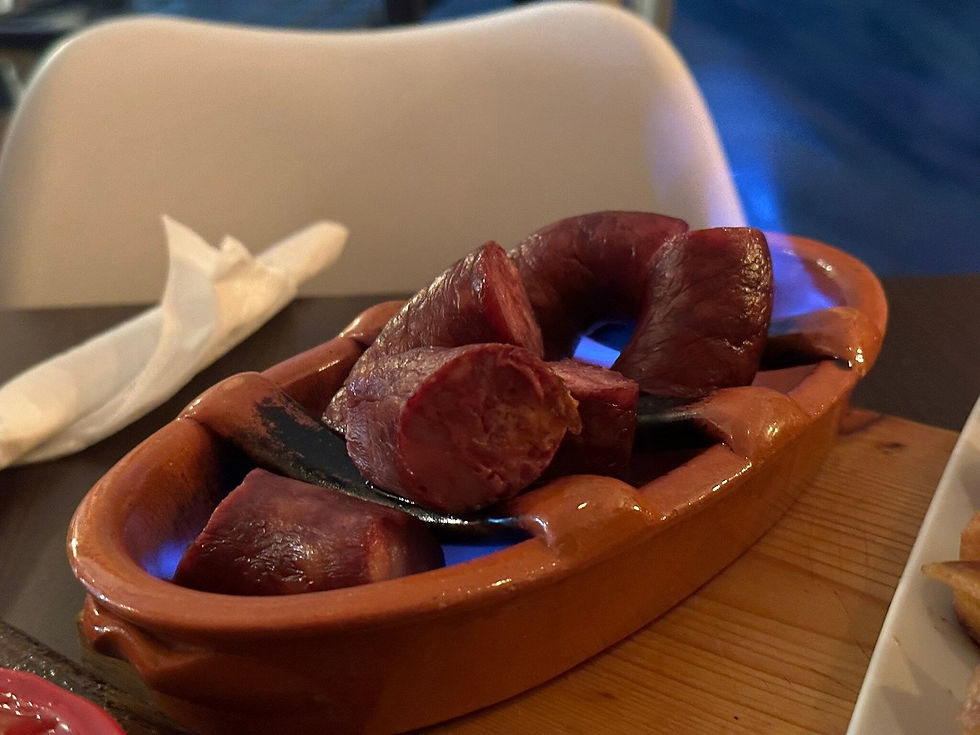
Traditional enchidos (sausages)
Hearty stews and broths
Menus that change little because they don’t need to
This isn’t nostalgia. It’s continuity.
Why a Food Tour Is the Best Way to Taste Guimarães
Guimarães doesn’t explain itself easily. Its best food isn’t always labeled, translated, or Instagrammed. Some of the most authentic places look unassuming — until the food arrives.
That’s where a local-led food tour changes everything.
Instead of guessing:
You’re guided to the right taverns
You understand why dishes taste the way they do
You experience Minho cuisine in the order, context, and rhythm it deserves
You don’t just eat rojões or papas de sarrabulho. You learn when, where, and why they matter.

Final Thoughts
Guimarães doesn’t chase trends. It doesn’t soften its flavors. It doesn’t apologize for its richness. From cradles to crockpots, this city reminds us that nations may begin in castles — but they endure in kitchens, one shared meal at a time. And there’s no better way to understand that than by tasting it, step by step, with someone who knows the way. Stay tuned for more travel tips, hidden gems, and inspiration right here on our website. Follow us on our instagram @thewalkingparrot to be continuously updated on new releases. We will be back soon with a new article!


Comments